HomePortfolio

Portfolio Archive | Basca Srl

Credibly reintermediate backend ideas for cross-platform models. Continually reintermediate integrated processes through technically sound intellectual capital. Holistically foster superior methodologies without market-driven best practices.
IMG_4559
IMG_4580
IMG_4598

Case StudyBascaMobile Automatic Cleaning System for Large Fixed Production Tanks

Discover how a multinational manufacturer of paints and construction chemicals automated the cleaning of two large fixed production tanks, reducing water consumption, eliminating manual confined-space cleaning and improving production safety and process reliability.

Initial situation

The customer had recently built a new production facility equipped with two large fixed mixing tanks used for the manufacturing of paints and construction chemicals.

At the end of each production batch, the tanks needed to be thoroughly cleaned before starting the next cycle. An ineffective cleaning process could lead to cross-contamination between products and create conditions for bacterial growth inside the tanks, potentially compromising the quality of subsequent production.

The alternative was to perform the cleaning manually. This would have required an operator to enter the tank after every production cycle and clean the internal walls, agitators and dispersers using a high-pressure lance.

Besides requiring approximately 2 hours for every cleaning cycle, this solution would have introduced significant safety challenges related to confined-space entry, high-pressure cleaning operations and the management of personnel inside the tanks.

Case StudyThe solution

The applied solution

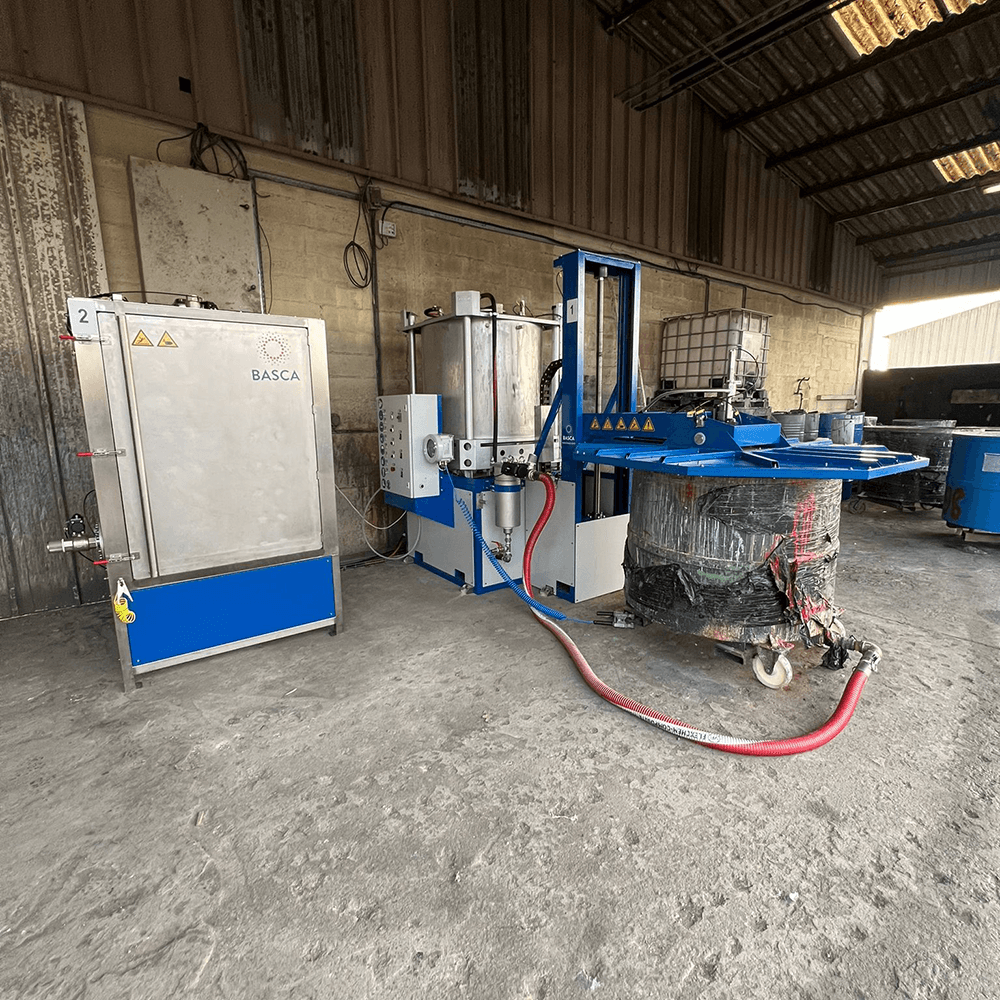
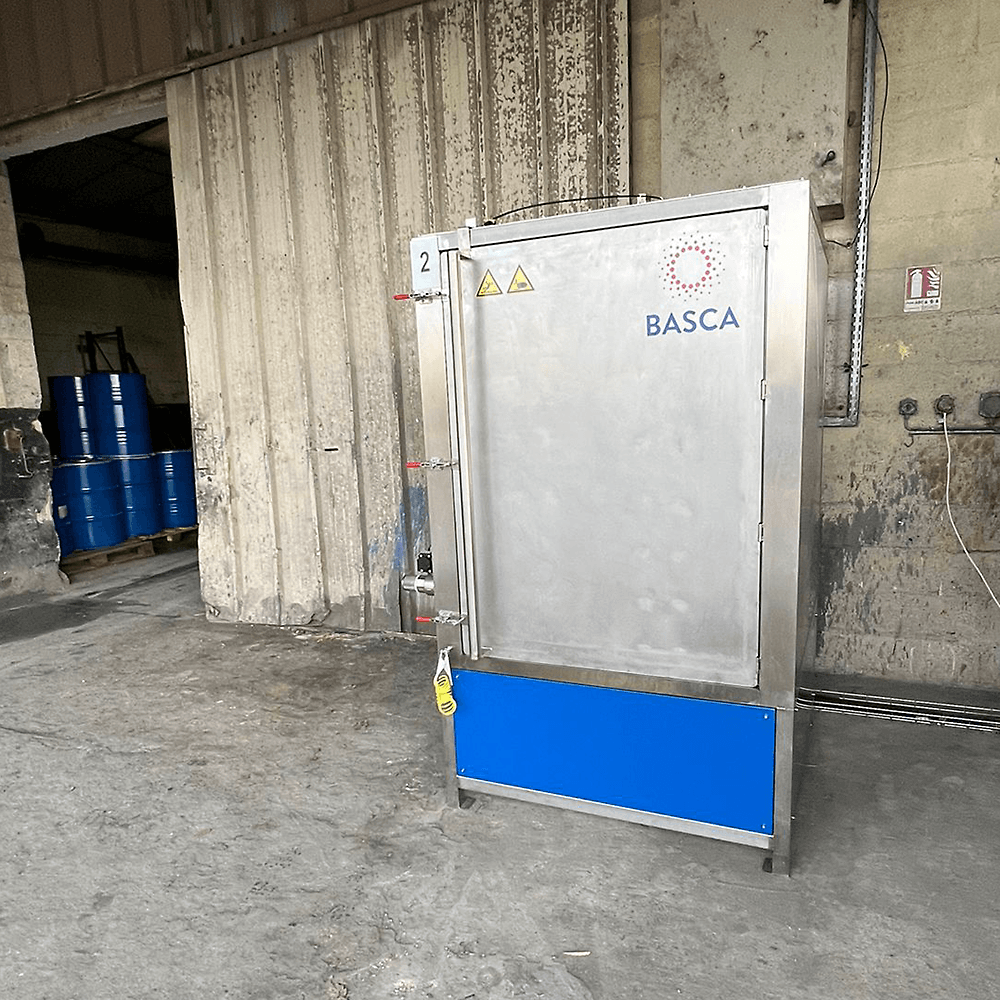
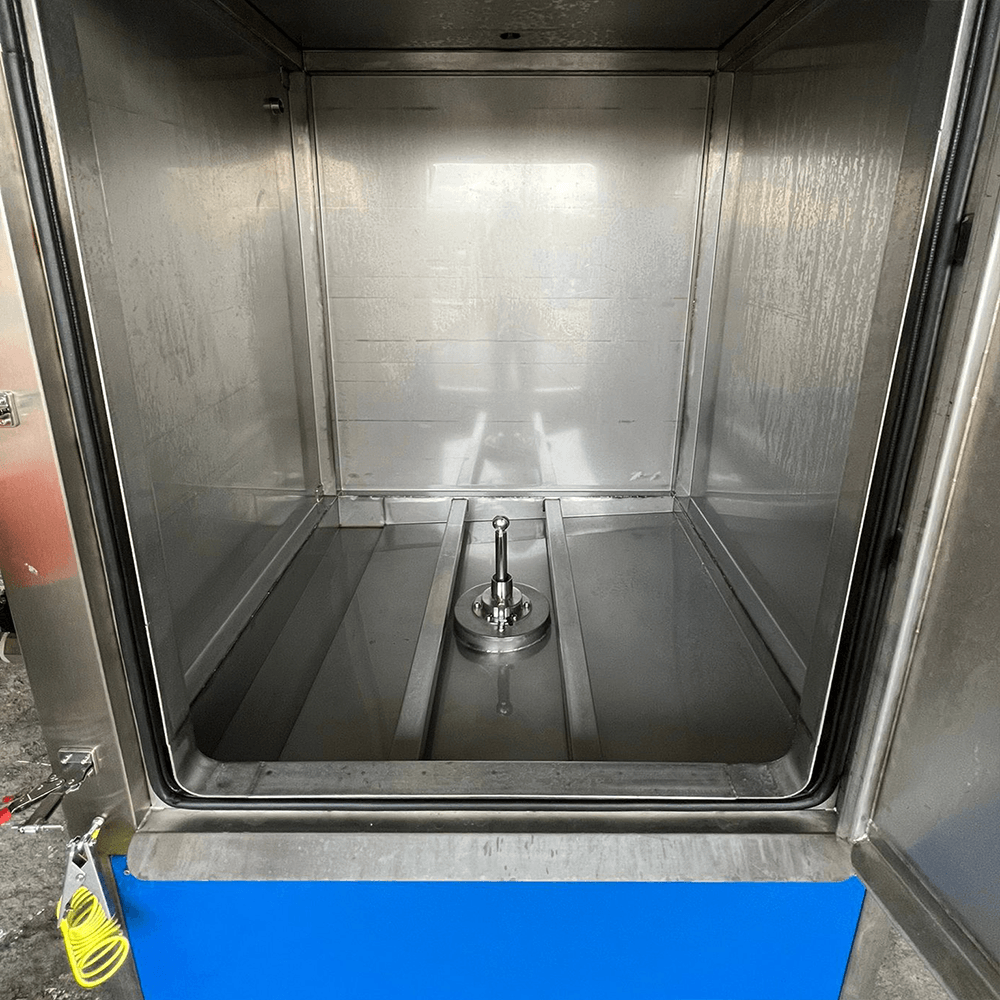
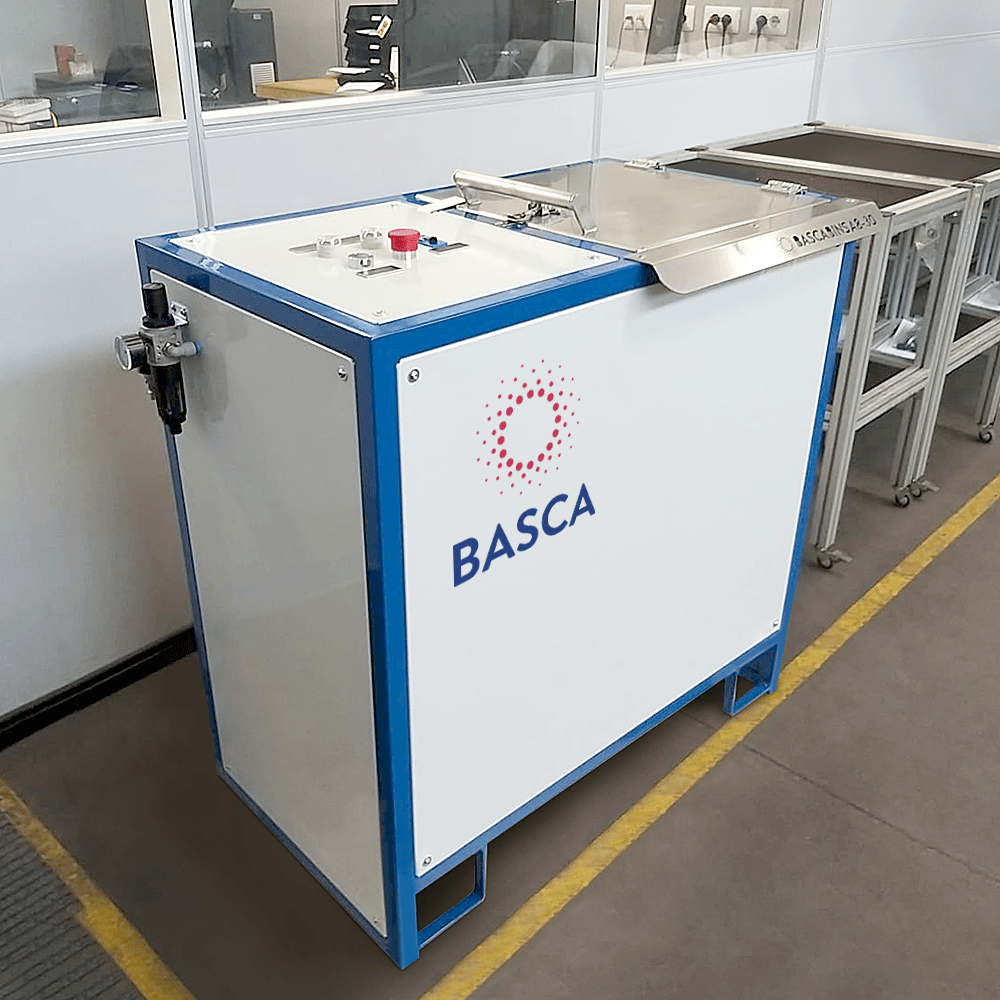
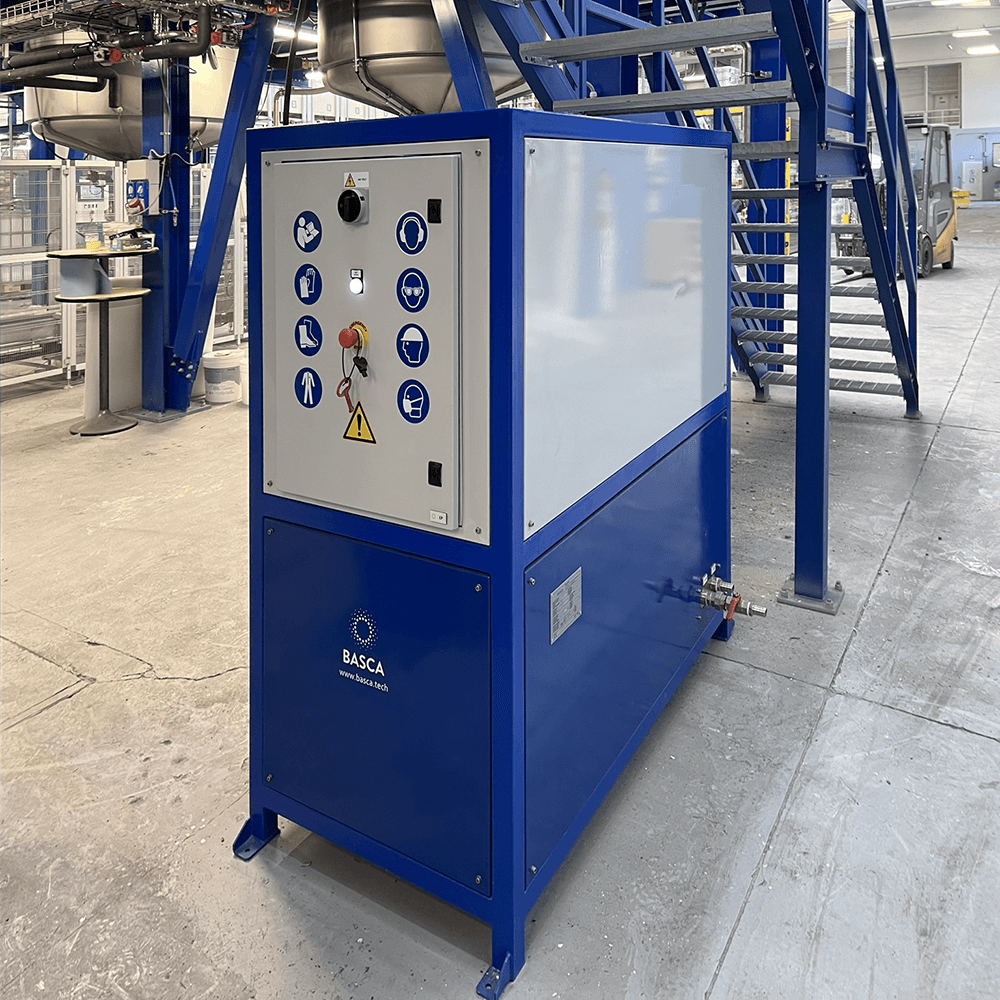
Basca designed and supplied a fully automated cleaning solution based on the BascaMobile high-pressure washing system.

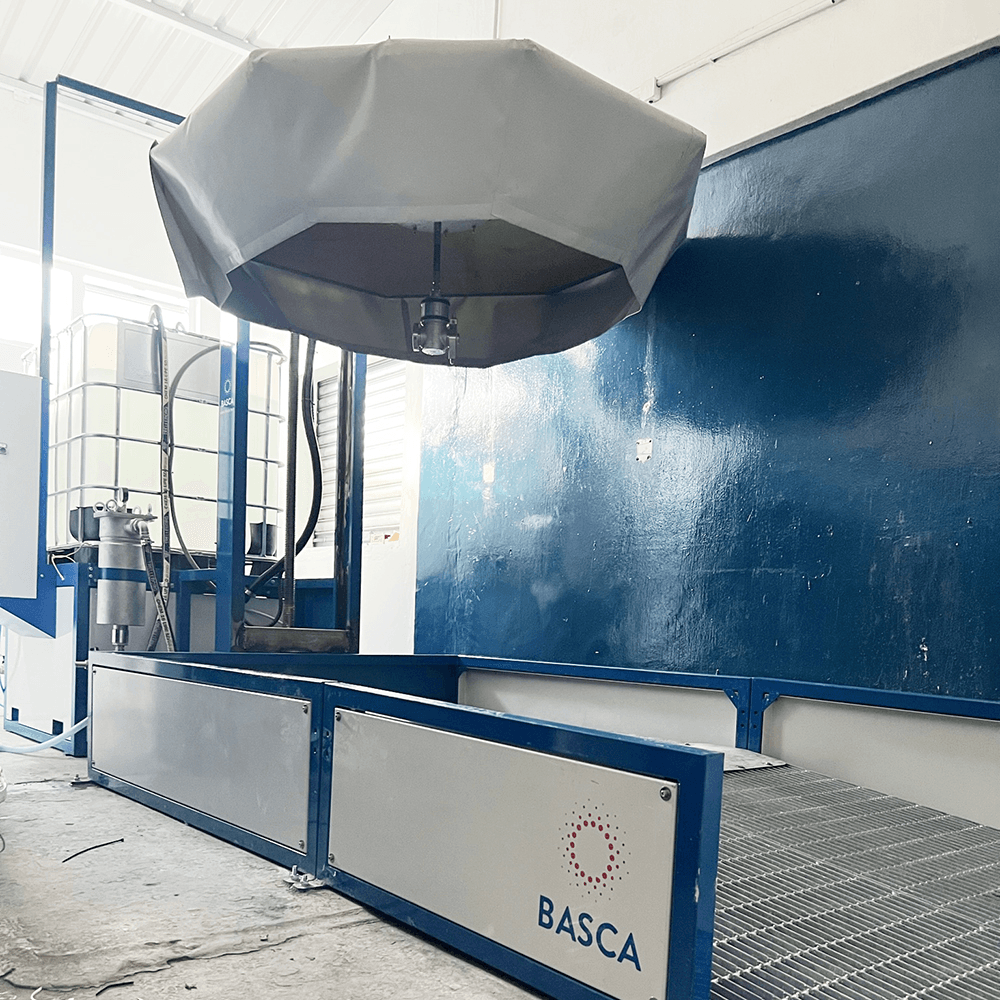
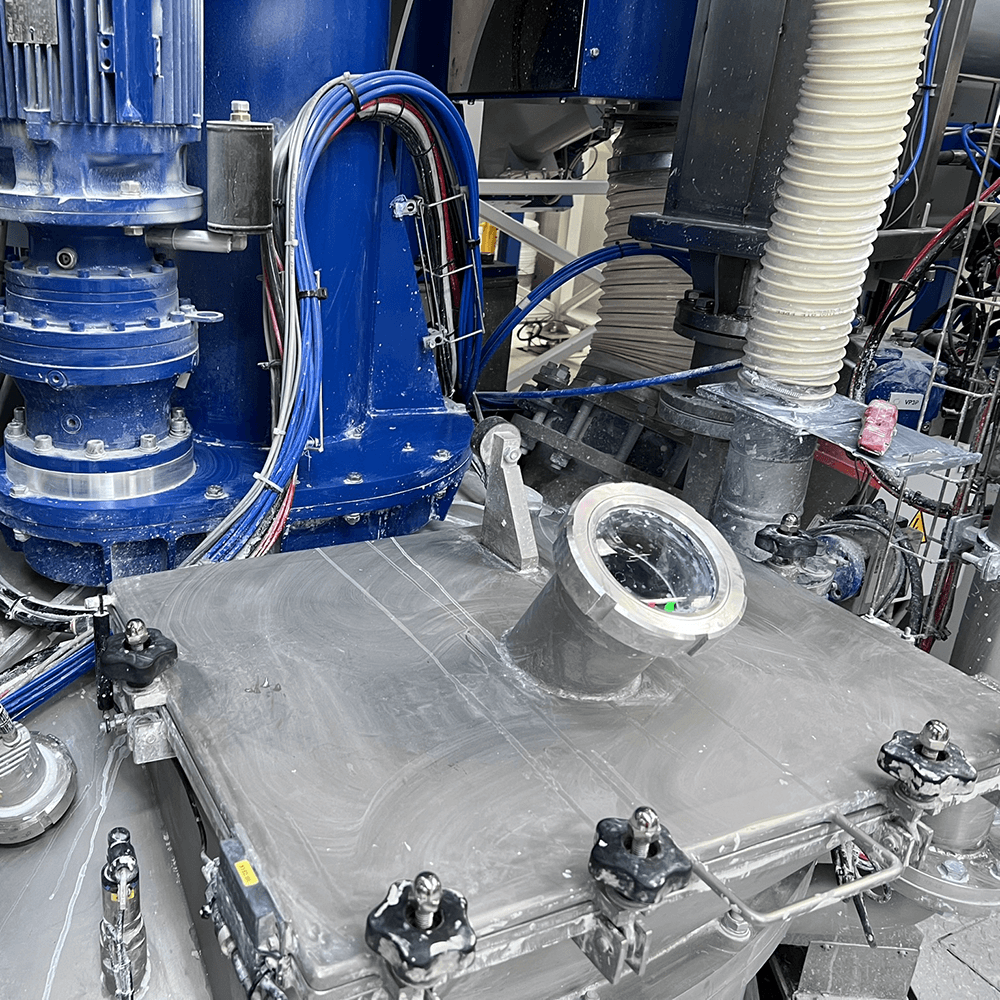
The BascaMobile unit is connected through fixed high-pressure piping to motorized washing heads installed above the production tanks.

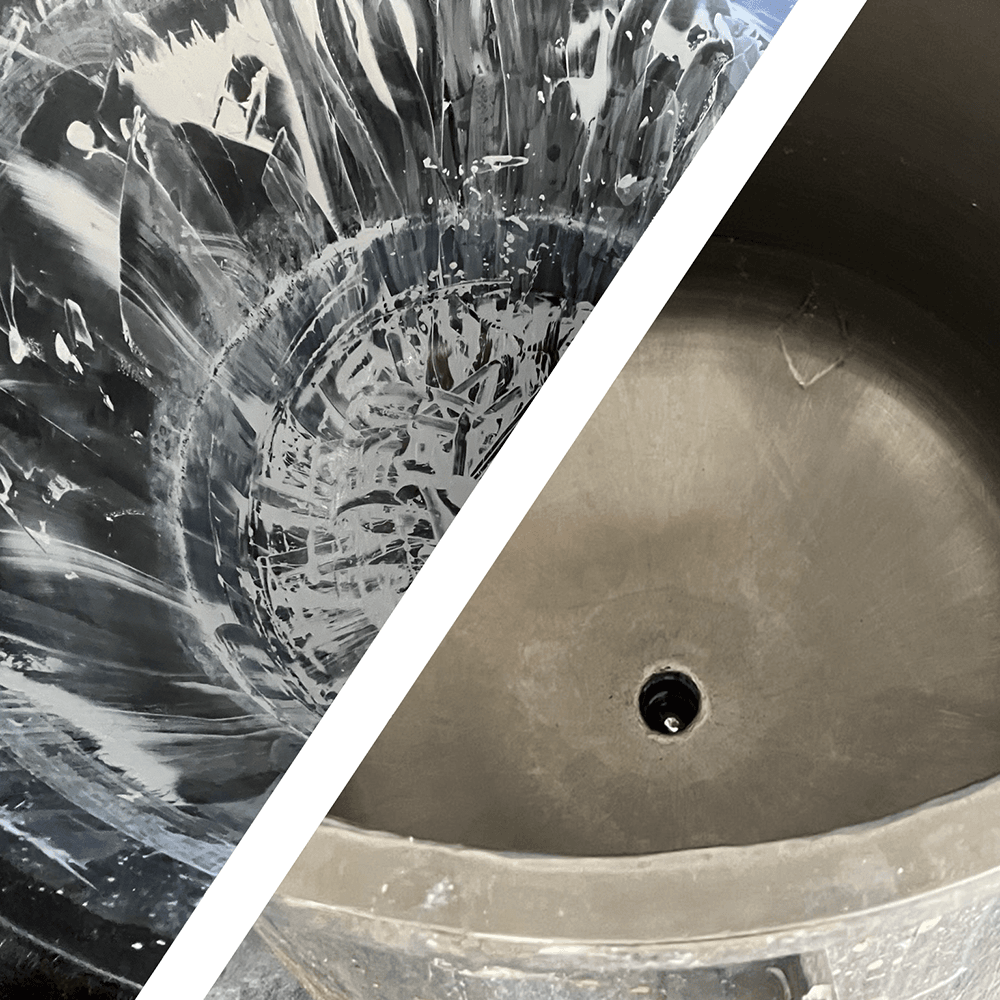
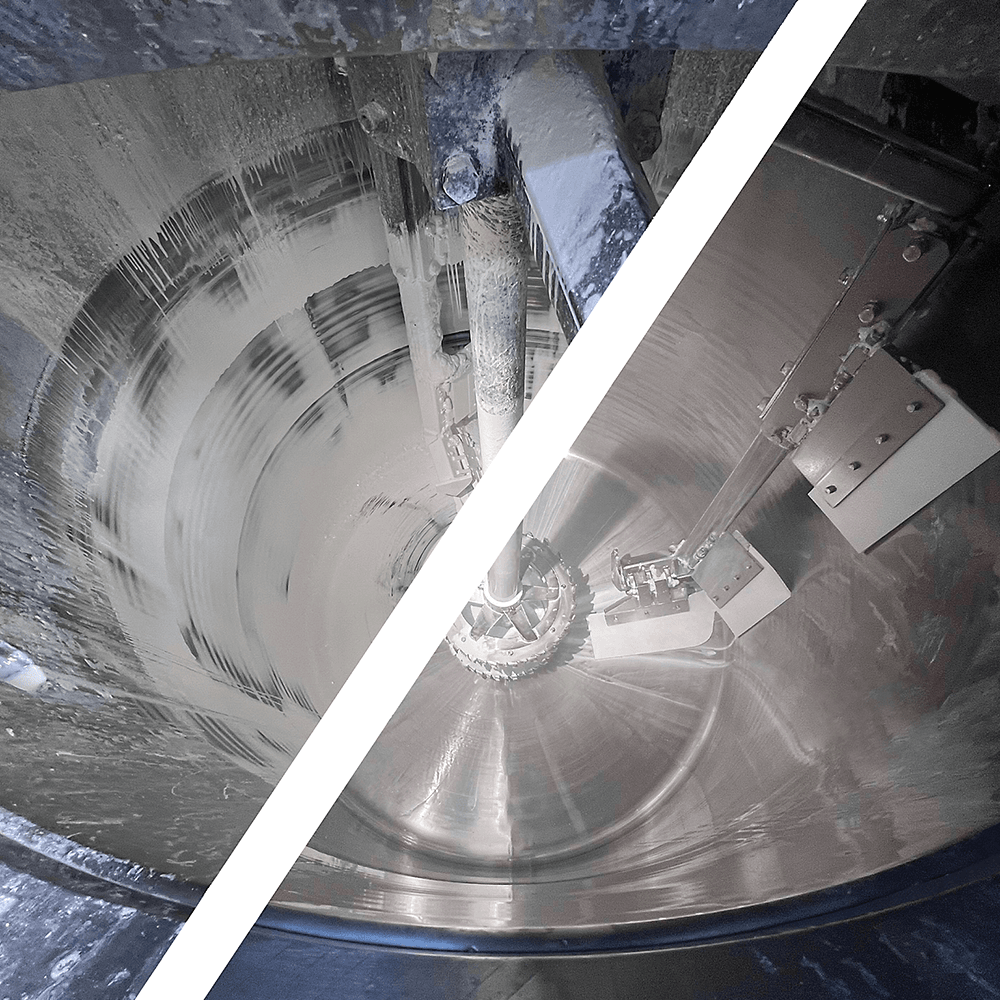
At the end of each production cycle, the washing heads automatically descend into the tanks and spray water at a pressure of 250 bar, thoroughly cleaning the internal surfaces as well as the agitators and dispersers.

The washing system is fully integrated with the factory’s centralized SCADA system through industrial communication protocols.

This integration allows the Basca washing system to automatically receive the production status and start the cleaning cycle at the correct moment.

During washing, the Basca PLC also exchanges information with the production control system to automatically modify the position of the dispersers, allowing the washing heads to reach and clean all critical areas inside the tanks.

The entire cleaning process therefore takes place automatically, without requiring an operator to enter the tanks.

Results obtained

By automating the cleaning of the fixed production tanks, the customer significantly improved both production efficiency and workplace safety.

The system eliminates the need for a dedicated operator to enter the tanks and perform manual high-pressure cleaning, removing one of the most complex and safety-critical activities from the production process.

Automation also reduces production downtime between batches, while ensuring a repeatable cleaning sequence after every production cycle.

Thanks to the optimized high-pressure cleaning process, the customer estimates a water saving of approximately 2,100 litres per cleaning cycle.

The automated and repeatable process also significantly reduces the risk of product cross-contamination and bacterial contamination, helping protect the quality of subsequent production batches.

Case StudyBenefit

Reduced water consumption: approximately 2,100 L saved per cleaning cycle
Reduced cleaning time: eliminating approximately 2 hours of manual cleaning per cycle
Improved operator safety: no operator entry required inside the tanks during cleaning
Lower labour requirement: no dedicated operator required for the washing activity
Reduced contamination risk: repeatable automatic cleaning between production batches
Full process automation: automatic communication between BascaMobile and the factory SCADA
Higher production efficiency: reduced downtime between production cycles

Case StudyResults

0123456789001234567890%

Less Water Consumption

Reduce water consumption from 2,700 to 600 litres per cleaning cycle, saving approximately 2,100 litres of water every cycle.
0123456789001234567890%

Faster Cleaning Process

Reduce the cleaning cycle from 120 minutes to just 20 minutes, minimizing downtime between production batches.
0123456789001234567890%

Less Operator Time

Reduce operator involvement from 120 minutes to just 5 minutes, limited to process verification and cleaning validation.
012345678900123456789001234567890%

Manual Tank Entry Eliminated

Completely eliminate the need for operators to enter the tanks during cleaning, simplifying safety management and reducing exposure to high-risk activities.

Foto_2
Foto_3
Foto_4

Case StudyBascaLC Washing Machine to Clean Stainless Steel Mixing Tanks and IBCs

Discover how our client, one of the world’s leading producers of paints, has simplified the process of washing steel tanks and drum containers, reducing washing cost by 62%, washing time by 70% and increasing the quality of cleaning.

Initial situation

Our customer has the need to wash between 10 to 25 mixing tanks and about 5 to 10 drums per day, the initial situation involved 3 workers washing manually using solvents and brushes to clean the tanks. This meant a cost that exceeded € 500 per day between labor and the cost of the solvent (€ 110.000 per year).
In addition, the working conditions for the workers were not acceptable, which meant that many times the quality of the wash that was obtained was not what expected.

Case StudyThe solution

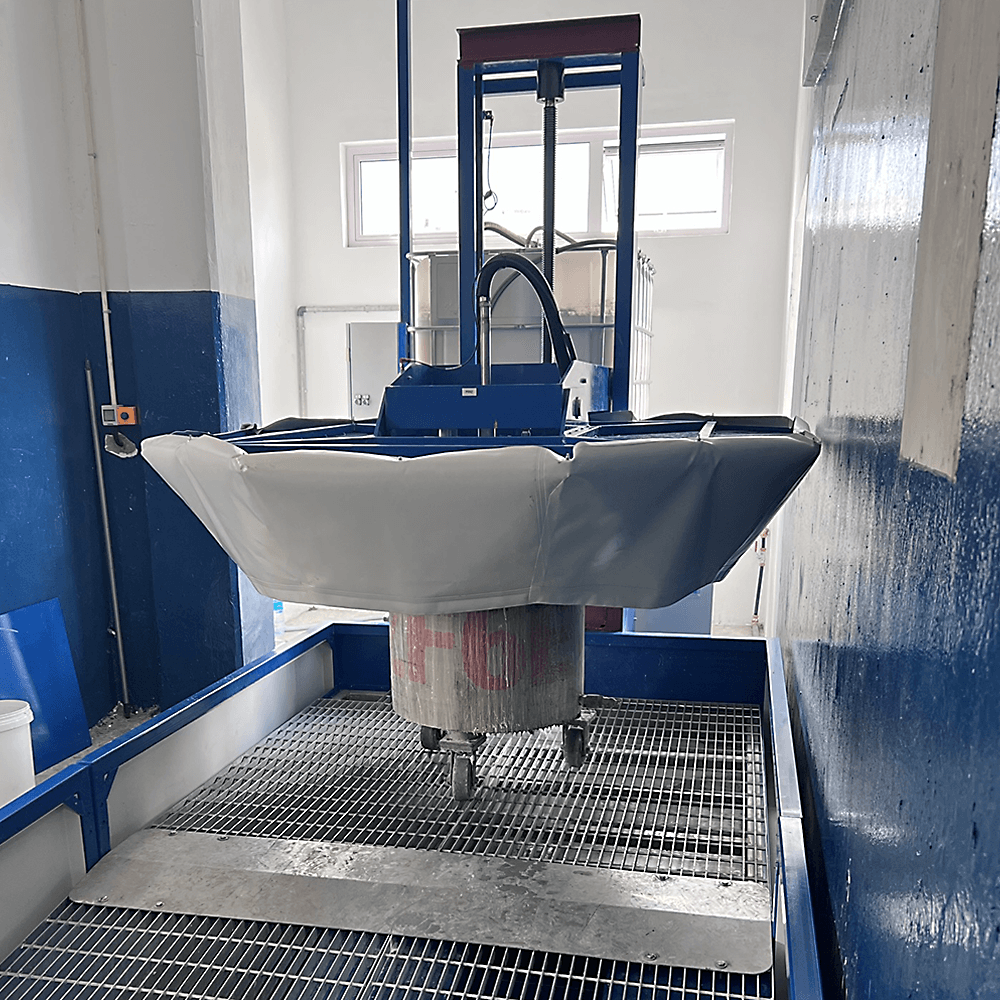
Basca supported the client to analyze the best solution to wash the containers thought washing test done at Basca Facilities. After determining the best washing solutions, we supply a BascaLC Washing Machine equipped with a high pressure rotating nozzle that injected solvent as a chemical agent for cleaning paired to a BascaDrums cabin, sharing the pump group from the BascaLC, to clean drums and small tanks.

Together with the Basca Washing Machine, we installed a solvent regeneration system that allowed to recover the dirty
solvent and use it again to wash, limiting the purchase and disposal of solvents.

The entire system is managed by a single operator, which allowed two people to be used to perform other tasks that generated greater value for the company.

The operator positions the tank to be washed in the correct position inside the machine; connects a tube for the recirculation of the solvent to the lower valve of the tank; selects the program in the control panel and starts the machine. The head of the machine introduces the rotating nozzle inside the tank and seals the top to prevent the solvent spillage in the tank top.

Inside, the nozzle rotated and move vertically exerting a mechanical effect, at the same time, the solvent run from a storage tank of the machine that recirculates through the tube connected to the lower valve. This form of washing lasts approximately 5 minutes. At the end of the wash cycle, the machine automatically switches to the rinsing mode and injects clean solvent into the system.

The volume equivalent of clean solvent that has been injected into the recirculation system is transferred to an auxiliary storage tank. Once the auxiliary storage tank is filled, it transfers the solvent to the solvent regeneration machine, which separates the solvent from the paint pigments and obtains a clean solvent and an inert mud that can be easily discarded. The operation of the regeneration system is automatic and does not require the dedicated use of an operator.

The regenerated solvent is transferred to a clean solvent storage tank and will be injected in the following rinse cycles. In this way the solvent is kept in a closed circuit, eliminating it’s consumption at all. This is a huge improvement in the safety conditions inside the factory since it’s not necessary to manually transport highly flammable substances.

Applying this technology, a single operator manages all the operation of the system, it has the possibility of washing a greater number of mixing tanks and in less time, the risk of health problems is reduced by eliminating the exposure of workers to toxic products and simplifies the management of dangerous products.

Case StudyBenefit

Increase in productivity: a greater number of tanks that can be washed.
Increase in efficiency: less dispersion of resources and controllable processes.
Labor cost reduction: the reduction of low added value activities.
Increased safety: no more jobs at high risk to health and elimination of the transport of hazardous substances.
Greater flexibility: the ability to wash different types of containers.

Case StudyResults

0123456789001234567890%

Lower Washing Costs

Reduce washing costs through process automation, lower labour requirements and solvent recovery, delivering a significantly more efficient cleaning operation.
0123456789001234567890%

Faster Washing Process

Cut washing time by 70%, accelerating tank and IBC cleaning while improving consistency and cleaning quality
0123456789001234567890%

Less Labour Required

Reduce the washing operation from 3 workers to just 1 operator, freeing two people for higher-value activities elsewhere in production.
012345678900123456789001234567890%

Solvent Reused in a Closed Loop

Recover and regenerate the cleaning solvent for reuse in subsequent cycles, creating a closed-loop process that eliminates ongoing solvent consumption.

IMG_3350
IMG_3396
IMG_8194

Case StudyBasca washing machine to clean mixing tanks for paint production

Discover how our client, a paint manufacturer, has simplified the process of washing its mixing tanks, reducing washing cost by 78%, washing time by 75% increasing cleaning quality and operator safety.

Initial situation

The customer has the need to wash about 10 mixing tanks per day, the initial situation involved 1 operator full time washing manually using high pressure washer. This meant a cost that was exceeding € 250 per day considering labor and waste water disposal cost (€ 55,000 per year).
In addition, the working conditions for the worker were not acceptable, which meant that many times the final tank quality was not as expected and the washbay quite untidy and slippery.

Case StudyThe solution

Basca supported the client to analyze facts and figures of the present situation, suggesting possible solutions to wash the containers in automatic way. Then a washing test at Basca facilities has been done to find the most suitable machine configuration. One the desired machine configuration has been finalized we have supplied a Basca Washing Machine equipped with a 200 bar pump to spray the water on the tank surface granting a perfect cleaning in about 5 to 8 min/tank.

Together with Basca Washing Machine, we installed a wastewater recovery system that allowed to recycle and reuse the washing water again and again for further washing cycles, reducing the related costs.

The whole system is managed by a single operator less than 2 hours/day, which allowed the company to let him perform other tasks thanks to time savings, generating great value for the company itself.

Case StudyBenefit

Increase in production: a greater number of tanks that can be washed.
Increase in efficiency: less dispersion of resources and controllable processes.
Labor cost reduction: the reduction of low added value activities.
Increased safety: no more jobs at high risk to health and elimination of the transport of hazardous substances.
Greater flexibility: the ability to wash different types of containers.

Case StudyResults

0123456789001234567890%

Lower Washing Costs

Reduce annual washing costs from €55,000 to €12,000, saving approximately €43,000 every year.
0123456789001234567890%

Less Operator Time

Cut daily operator involvement from 8 hours to less than 2 hours, freeing valuable resources for higher-value activities
012345678900123456789001234567890%

Higher Washing Productivity

Increase washing capacity from 2 to 8 tanks per hour, delivering 4× the original throughput.
0123456789001234567890%

Faster Cleaning Cycles

Reduce the effective cleaning time from roughly 48 minutes per tank in the manual process to just 5–8 minutes with automated washing.

PHOTO-2020-03-13-16-57-06_S
PHOTO-2020-03-13-16-57-06 (4)_S
CasaStudies_gallery1_Apimiel_1000x1000px

Case StudyHoney bucket washing

Discover how our client APIMIEL (Switzerland), honey producer, has improved the process of washing buckets, reducing cost related to washing process of 66,8% increasing cleaning quality, operator safety and gain.

Initial situation

Apimiel has the need to wash about 30 buckets per day, the initial situation involved an operator to clean manually the buckets in a washbay. The customer said to us “I want to improve my cleaning process and not wasting anymore operator’s time with low value activities” The low value activity he was talking about had a cost related to 1h per day of operato’s time, that’s exceeding € 9.000 per year (€/h 37,50). In addition the water usage per bucket was about 10l, that makes 72.000l of water wasted.

Case StudyThe solution

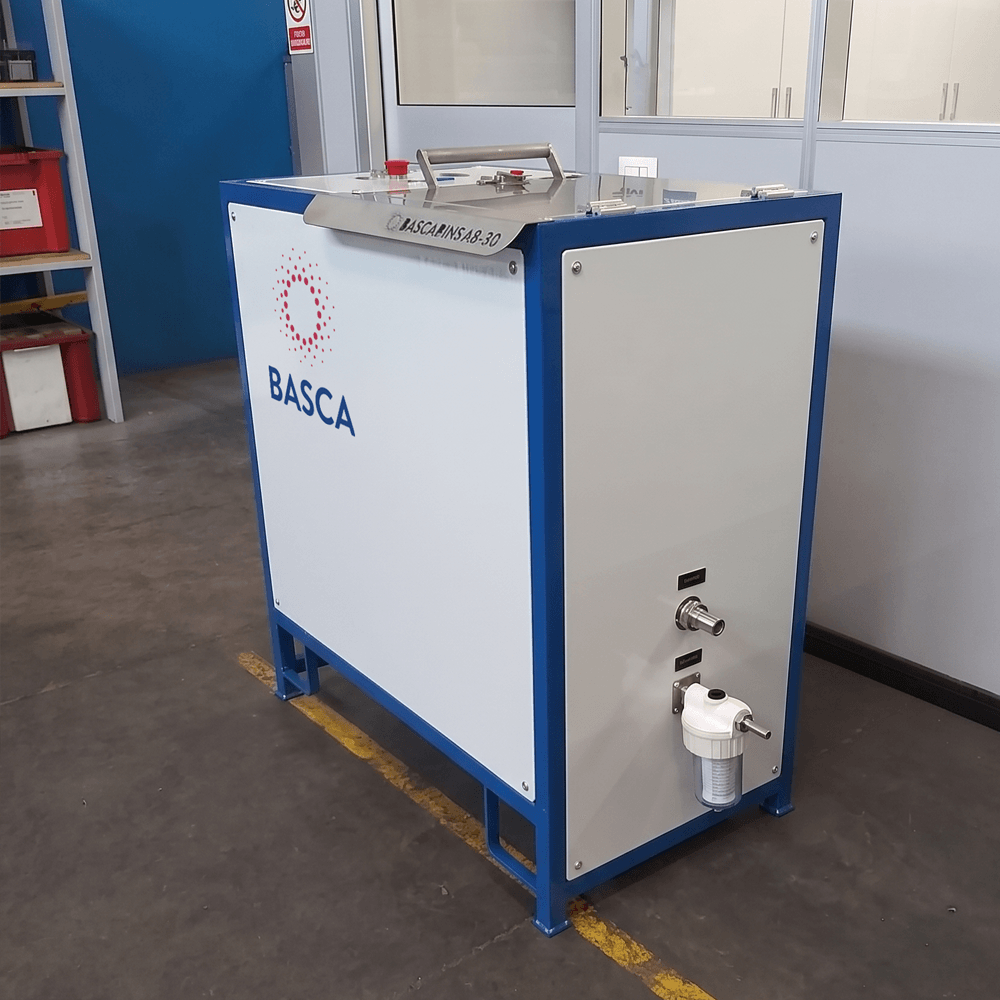
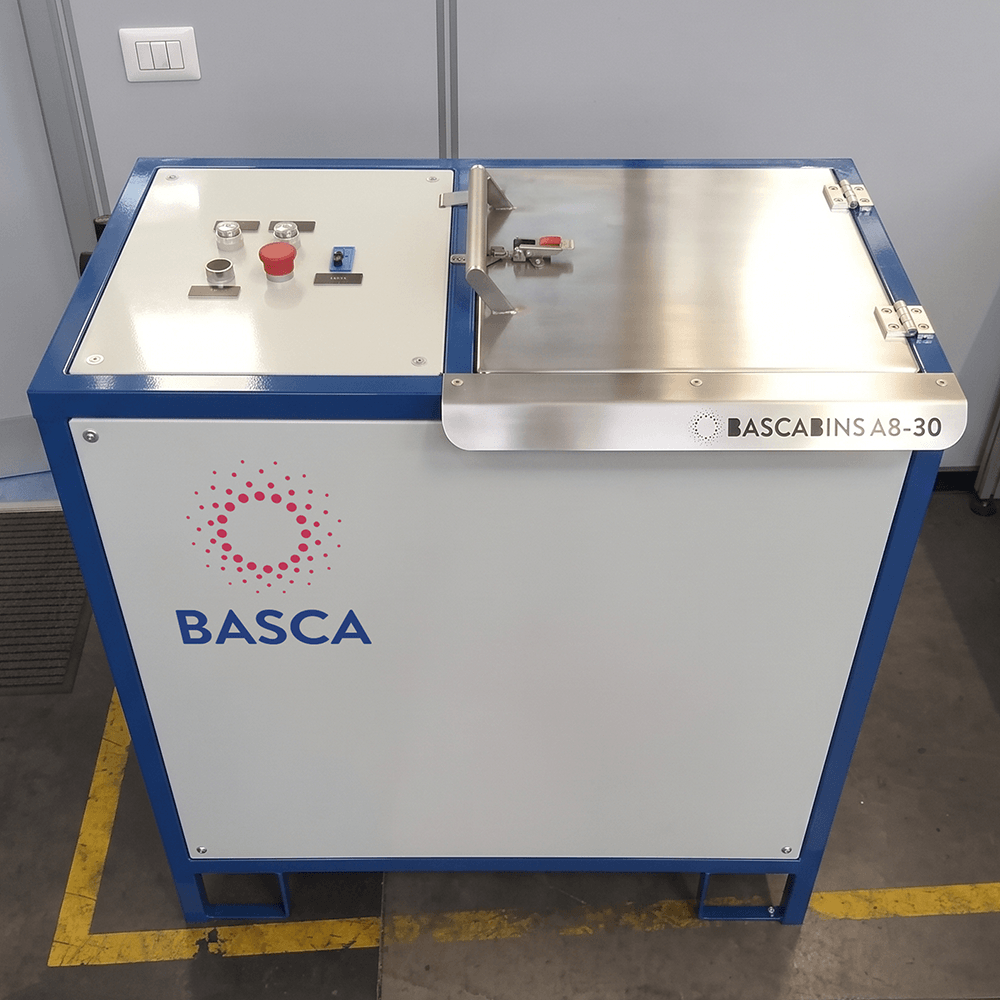
Basca supported the client to analyze facts and figures of his situation, suggesting possible solutions to wash the buckets in automatic, enviro friendly and safe way. Then a washing test at Basca facilities has been done to find the most suitable machine configuration. Once the desired machine configuration has been finalized, we have supplied a BascaBins Washing Machine equipped with a pneumatic pump to spray the water on the bucket surface granting a perfect cleaning in less than 20 seconds!

The water consumption dropped to 1l per bucket with an yearly water saving of 64.800 L.

The whole system is managed by an operator in about 20 minutes/day, which allowed the company to let him perform other tasks, thanks to time savings, generating great value for the company itself.

Case StudyBenefit

Productivity increase: a greater number of tanks that can be washed.
Efficiency increase: less resources usage and controllable processes.
Labor cost reduction: reduction of low added value activities.
Increased safety: no more risk if injury related to wet washbay
Greater flexibility: the ability to wash different types of containers.
Large savings: Washing with BascaBins is more sustainable and much cheaper.

Case StudyResults

0123456789001234567890.01234567890%

Lower Washing Costs

Cut annual washing costs dramatically by automating repetitive manual operations and reducing resource consumption.
0123456789001234567890%

Less Water Consumption

Cut water usage from 10 litres to just 1 litre per bucket, making every cleaning cycle significantly more sustainable.
012345678900123456789001234567890%

Higher Productivity

Increase washing capacity from 2 to 8 containers per hour, delivering four times the original throughput.
0123456789001234567890.01234567890%

Less Operator Time

Reduce daily operator involvement from 60 to just 20 minutes, freeing valuable time for higher-value activities.